From Hatillo to Hartford
Joxel Garcia was born and raised in Hatillo, a municipality on the northern coast of
Puerto Rico known for its vibrant cultural traditions. He pursued pre-medical studies
at the University of Puerto Rico at Mayagüez before earning his Doctor of Medicine
degree from the Ponce School of Medicine. His medical training continued on the
mainland, where he completed his residency in obstetrics and gynecology at Mount Sinai
Hospital in Hartford, Connecticut.
Garcia's early clinical career was rooted in women's health. He served as Assistant
Director of Obstetrics and Gynecology at Saint Francis Hospital and Medical Center in
Hartford, building a foundation of patient-centered care that would shape his approach
to population health for decades. During this period, he also pursued a Master of
Business Administration at the University of Hartford, equipping himself with the
management and strategic skills that would prove essential in every leadership role
to come.
Connecticut: Forged in Crisis
In 1999, Garcia was appointed Commissioner of the Connecticut Department of Public
Health, placing him at the helm of one of the nation's most complex state health
agencies. It was a role that would soon test him in ways no one could have predicted.
When the anthrax attacks of 2001 struck the United States, Connecticut was directly
affected. Garcia led the state's public-health response—coordinating
investigations, ensuring medical countermeasure distribution, and communicating with
a frightened public. He went on to spearhead Connecticut's bioterrorism preparedness
infrastructure and helped launch the national smallpox preparation and vaccination
plan. Official White House archival records credit his leadership during this period
as a defining moment in the national biodefense effort.
The World Stage: PAHO and the WHO
Garcia's crisis-leadership experience propelled him onto the international stage.
He was appointed Deputy Director of the Pan American Health Organization (PAHO), the
regional office of the World Health Organization for the Western Hemisphere. In this
role, he helped set the strategic direction of the organization alongside its director,
managed policy relationships with the governments of the United States, Canada, and
Puerto Rico, and oversaw PAHO's emergency preparedness and disaster relief operations
across the Americas.
The PAHO role deepened Garcia's conviction that effective public health is inherently
diplomatic—requiring not only clinical expertise but also the ability to navigate
complex political landscapes, negotiate across sovereign boundaries, and mobilize
multinational resources under time pressure.
Admiral and Assistant Secretary for Health
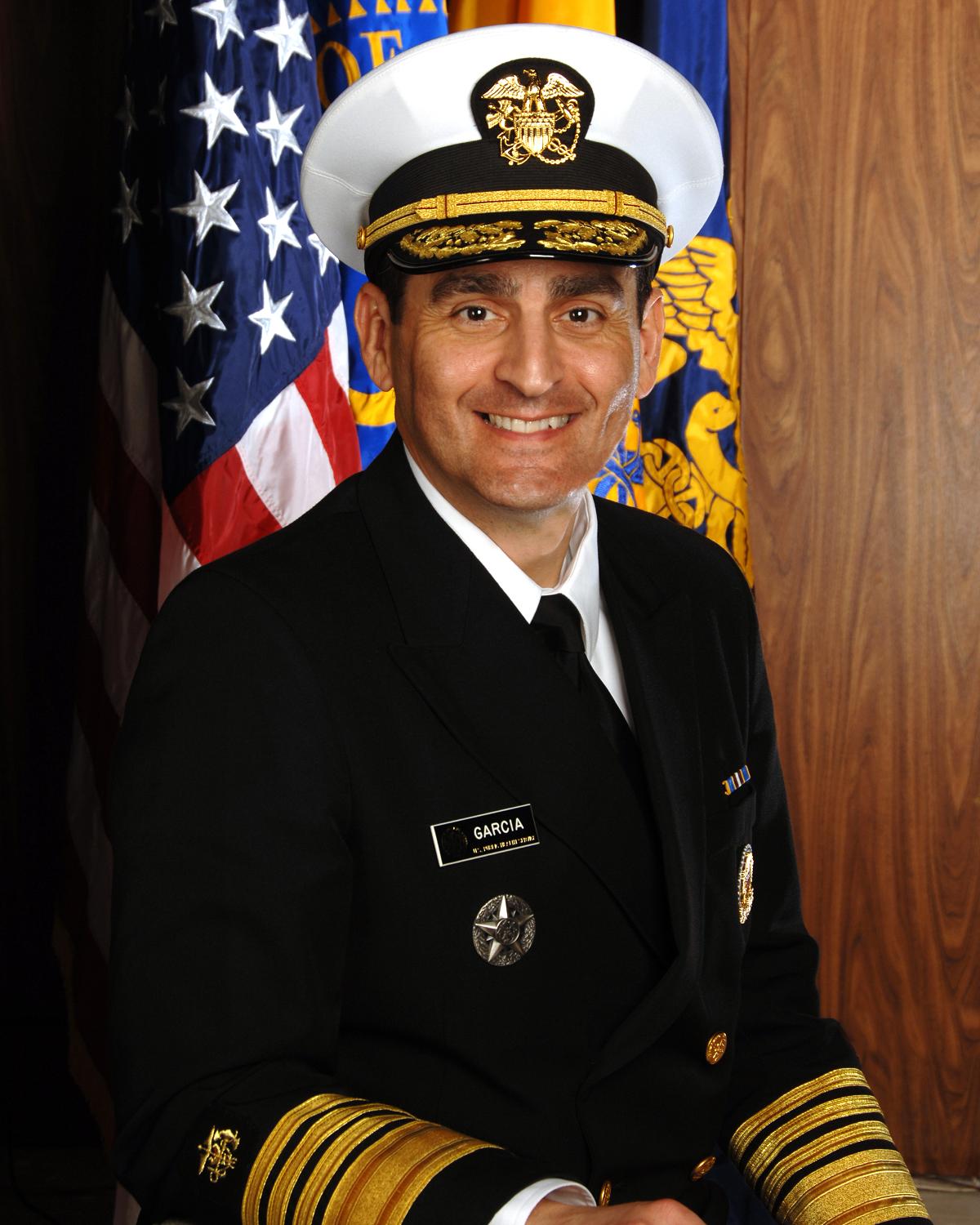
On March 14, 2008, the United States Senate confirmed Joxel Garcia as the 13th
Assistant Secretary for Health at the U.S. Department of Health and Human Services.
With that confirmation came a historic distinction: Garcia became the first Puerto
Rican to hold the position, and he was simultaneously appointed as an Admiral in the
U.S. Public Health Service Commissioned Corps.
As Assistant Secretary, Garcia served as the Secretary of HHS's primary advisor on
matters of national public health and science. His portfolio was sweeping: disease
prevention, health promotion, public-health preparedness, women's health, minority
health, reduction of health disparities, HIV/AIDS response, pandemic influenza
planning, and vaccine-preventable disease policy. He also served as the U.S.
Representative to the World Health Organization and commanded more than 6,220
uniformed officers of the USPHS Commissioned Corps deployed across the United States
and 88 countries worldwide.
Academia, Cancer Prevention, and Beyond
After his federal service, Garcia returned to Puerto Rico to serve as President and
Dean of Medicine at the Ponce School of Medicine and Health Sciences—the same
institution where he had earned his own medical degree. In this role, he worked to
strengthen the medical school's academic programs and institutional foundations,
shaping the next generation of physicians.
In 2012, Washington, D.C. Mayor Vincent C. Gray tapped Garcia to lead the District's
Department of Health, bringing his state, federal, and international experience to
bear on the health challenges of the nation's capital. He later joined the private
sector, serving as Vice President and Chief Medical Officer at American Express, where
he oversaw the company's global wellness centers and developed employee health
strategies, and as Senior Vice President and Senior Medical Advisor at MAXIMUS Federal
Services.
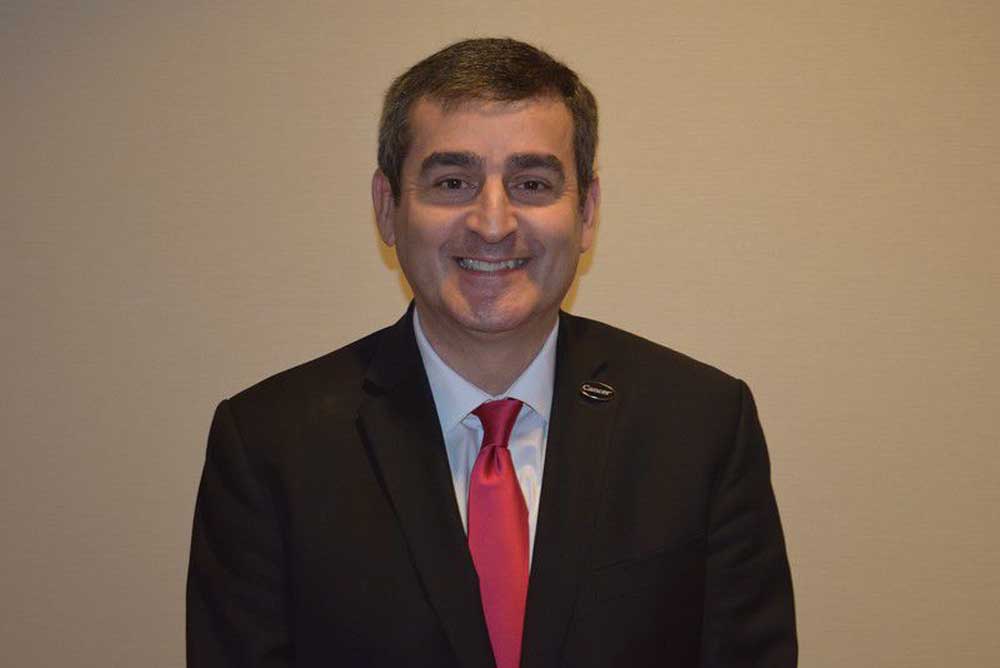
In 2015, the University of Texas MD Anderson Cancer Center recruited Garcia to serve
as the inaugural Executive Director of its Cancer Prevention and Control Platform,
part of the institution's landmark Moon Shots Program. There, he led the effort to
translate cutting-edge cancer research into community-facing prevention, screening,
early detection, and survivorship programs—with a particular emphasis on
reaching underserved populations who bear a disproportionate burden of cancer.
New York City: The Current Chapter
In June 2024, the New York City Department of Health and Mental Hygiene announced
Garcia as its First Deputy Commissioner and Chief Program Officer. In this role, he
provides leadership across the agency's cross-divisional initiatives, including
HealthyNYC, and oversees the divisions of Disease Control, Environmental Health,
Family and Child Health, and Mental Hygiene—directing public-health strategy
for the largest city health department in the United States.